
Published 5 min read
Why the Giver Never Pays on StuffRescue
Learn why StuffRescue is a completely free way to give away stuff, how the 3-mile free radius works, and why the giver never pays a fee.
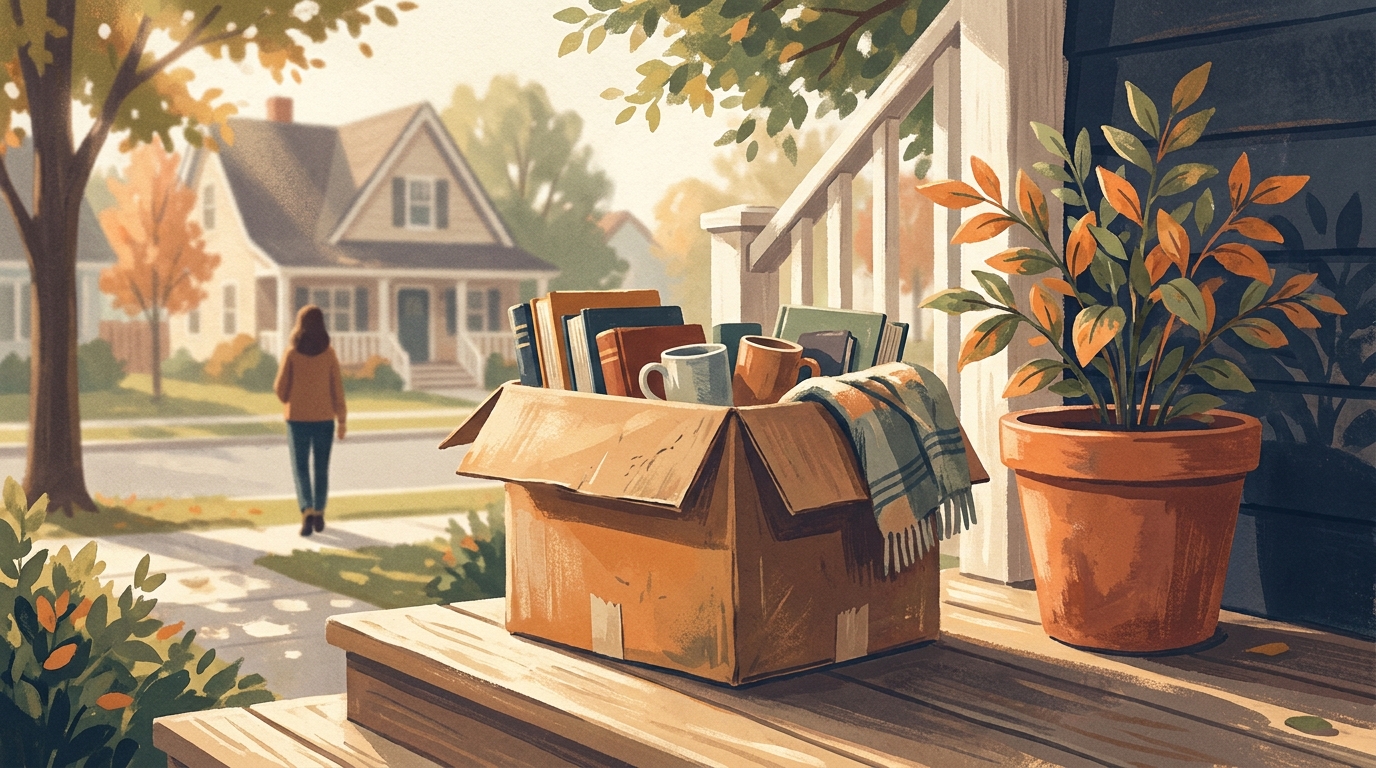
When you have a lamp, a dresser, or a winter coat you no longer need, passing it on should be easy. Nobody should have to pay to do a good deed. That is why StuffRescue is built as a completely free way to give away stuff, keeping usable items out of the trash and helping neighbors.
In short
- The giver never pays to post or give away an item on StuffRescue.
- Browsing items and rescuing anything within 3 miles of your home is completely free.
- Rescuing an item beyond 3 miles costs the rescuer a flat $0.99.
- There is no selling, no haggling, and no cash exchanged between neighbors.
A completely free way to give away stuff
When you look around your home, you likely have things you no longer use. Our mission is simple: "Nothing useful should go to waste while a neighbor goes without." To make that a reality, we removed the financial barriers to giving. On StuffRescue, the giver never pays. Posting an item is always free, and there are no hidden charges to list your things.
We believe that if you are willing to take the time to post an item on StuffRescue, you have already done your part. You are offering something of value to your community. Charging you a fee to give something away would only discourage generosity. Whether you are clearing out a single closet or rehoming furniture before a move, you can give away items without fees every single time.
The true cost of throwing things away
Every day, enormous amounts of usable household goods are thrown out simply because the curb feels like the easiest option. According to the US Environmental Protection Agency (EPA), Americans generated 292.4 million tons of municipal solid waste in a single year. That breaks down to about 4.9 pounds of waste per person, every single day.
Even worse, exactly half of all that municipal solid waste—over 146 million tons—ends up sitting in landfills. When we throw away a perfectly good chair or a stack of books, we add to that burden. The EPA's official waste management hierarchy ranks source reduction and reuse as the most environmentally preferred strategy, putting it above recycling, composting, and landfilling.
Keeping items in circulation also benefits the economy. The EPA notes that recycling and reuse activities account for over 680,000 jobs in the United States. When you choose to rehome your unwanted goods, you are choosing the best possible path for the environment and supporting a broader culture of reuse.
How StuffRescue free rescues work
We built the platform so that neighbors can connect directly. There is no selling, no haggling, and no cash exchanged between neighbors. You simply tap the orange button to rehome an item, add one to three photos, and let our autofill suggest a title, category, description, and condition. You can edit any of these details before posting.
For the person looking for an item, browsing the map on the Discover page is completely free. When a neighbor finds your item and wants it, they tap to rescue it. If the item is located within a 3-mile straight line from their saved home location, rescuing it is completely free. We want immediate neighbors to be able to share and swap without anyone spending a dime.
When does a rescue cost money?
While the giver never pays, there is one specific time a rescuer pays a small amount. If a neighbor wants to rescue an item that is located more than 3 miles away from their saved home location, the rescue costs one flat fee of $0.99.
This cost is always shown clearly on the item before the person taps to rescue it. The rescuer pays this 99-cent fee from a prepaid wallet, which they can load in amounts of $5, $10, $15, or $20. If either person needs to cancel the rescue before the pickup happens, that 99 cents goes right back into the rescuer's wallet. You can read more about how the free 3-mile radius and pickup codes work in our detailed guide.
Dignity and community connection
StuffRescue is a registered nonprofit open in every US state, and our structure follows our impact. We operate on the principle of "Dignity, never charity." A neighbor who needs a winter coat or a dining chair should not have to explain why they need it. There are no applications and no proof of hardship required to join or to rescue an item.
When you post your items, you are directly supporting this system. The first person to claim the item gets it, and a private chat opens between just the two of you to arrange the pickup time. There is no delivery involved; the rescuer always comes to pick up the item. To protect your privacy, the map only shows neighborhood circles with counts, never your exact address. Only the rescuer gets the exact pickup spot, and only after they have committed to the rescue.
You get to hand off your item safely using a secure six-digit pickup code, knowing it is going to someone who actually wants it. The rescuer shows or reads the code at the door, and you check that it matches. If there is no match, there is no handoff. Once you confirm the handoff, the item is marked as rehomed.
- Do I have to pay a fee if my item is claimed by someone far away? No. The giver never pays on StuffRescue. If a rescuer lives more than 3 miles away, they pay the $0.99 fee from their prepaid wallet. You will never be charged.
- Can I ask the rescuer to pay me for a valuable item? No. Nothing is for sale on StuffRescue. There is no selling, no haggling, and no cash exchanged between neighbors. Every item posted must be given away for free.
- Do I have to deliver the item? No. There is no delivery on StuffRescue. The rescuer is responsible for picking up the item from the exact pickup spot you provide after the rescue is claimed.
Making StuffRescue free for givers ensures that our neighborhoods stay connected. We keep usable things in circulation, reduce the strain on our local landfills, and make sure that a good deed never comes with a price tag.
Sources
Published by StuffRescue, a US nonprofit based in Akron, Ohio. Spotted something out of date? Email info@stuffrescue.co.
More from the blog
The Dresser Nobody Wanted Until One Neighbor Did: A Rescue Story
A StuffRescue rescue story from Akron: an illustrative dresser nobody wanted finds a neighbor furnishing a first apartment, free, through the Giving Loop.
Garage Sale Leftovers: What Akron Neighbors Do With What Didn't Sell
Garage sale leftovers in Akron? See the real options — another sale, Goodwill, Habitat ReStore, Buy Nothing, or giving it to one neighbor who wants it.
Donating Furniture Without Sharing Your Address: How Pickup Codes Protect Survivors' Privacy
How pickup codes let you give furniture in Akron without sharing your address — a safety layer that matters most for domestic violence survivors.