
Published 5 min read
How Teachers Can Stock a Classroom With Rescued Supplies
Learn how to find free classroom supplies for teachers, navigate classroom furniture donations, and safely rescue items from neighbors to stock your room.
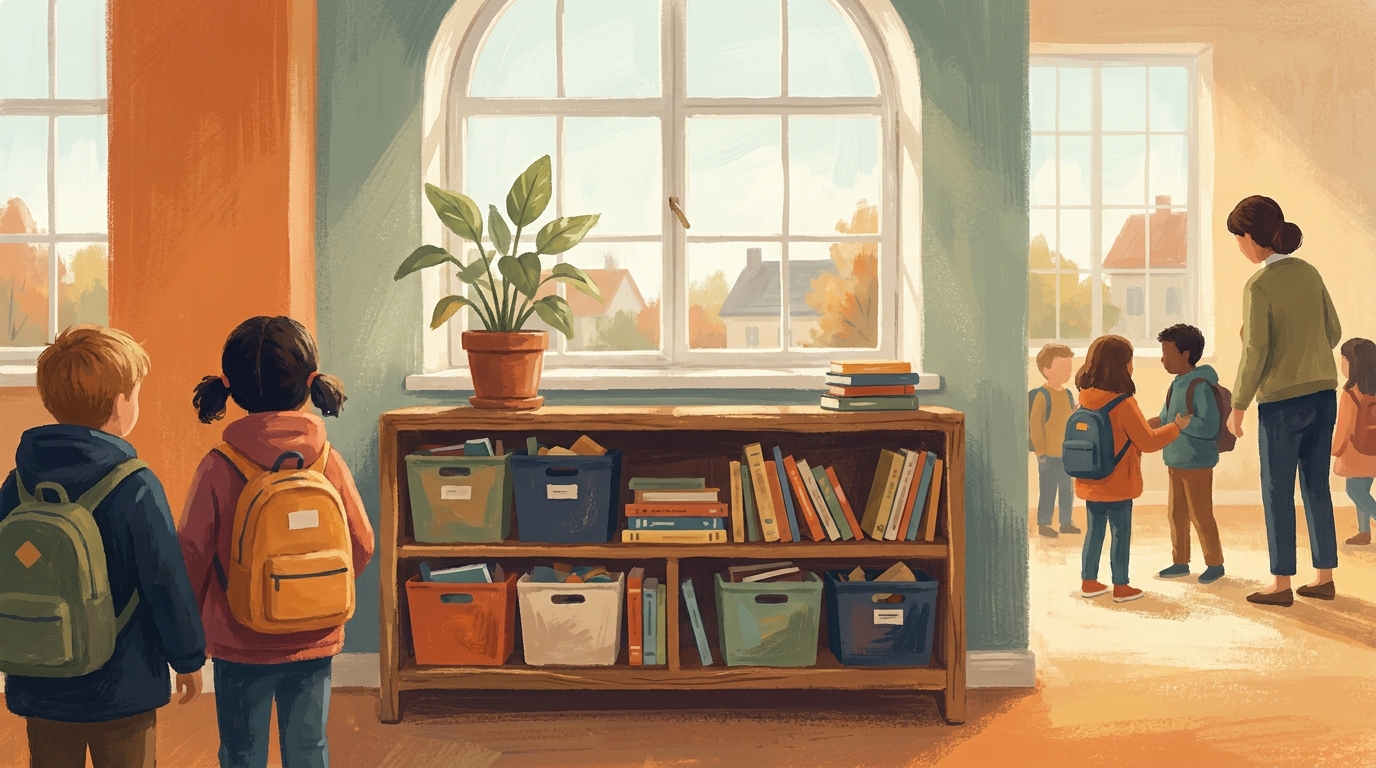
Setting up a welcoming room is expensive, and finding free classroom supplies for teachers can ease the financial burden. With educators spending hundreds out of pocket each year, rescuing gently used bins, books, and shelves from neighbors is a smart way to get teacher supply help. Here is how to gather what you need safely.
In short
- Teachers spend hundreds of dollars out of pocket each year to stock their classrooms.
- Rescuing gently used items like bins, books, and art supplies helps educators save money.
- Donated furniture must meet strict safety and stability standards, including wall anchoring.
- Always check your local school district fire codes before bringing residential furniture or fabrics into a classroom.
The growing need for teacher supply help
Teachers often buy their own materials to ensure students have what they need to succeed. In a 2025 survey by AdoptAClassroom.org, 82% of teachers reported purchasing essential supplies like paper and markers, while 64% bought books and inclusive classroom materials.
The costs add up quickly. A 2026 survey by the Kids In Need Foundation revealed that nearly 26% of educators spend more than $550 of their own money annually to stock their classrooms. Rescuing items that neighbors no longer need is a practical way to bridge this gap.
Where to find free classroom supplies for teachers
Neighbors often clear out gently used art supplies, storage bins, and children's books. If you are a teacher looking for materials, you can browse free items near you on the Discover page of StuffRescue.
Rescuing anything within a 3-mile straight line of your saved home location is completely free. If an item is further away, a rescue costs one flat $0.99, paid from a prepaid wallet. You will always see the cost before you tap "Rescue this Item." You can learn more about how the free radius and pickup codes work.
When you find an item you need, simply open it on Discover, read the description, condition, and cost line, and tap to rescue it. The first person to claim it gets it. A private chat opens between you and the giver to agree on a time. There is no delivery; you pick the item up yourself. For privacy, you only get the exact pickup spot under My Rescues after claiming the item. When you arrive, you will show or read a six-digit pickup code that only the two of you see. The giver checks that it matches before handing the item over.
Schools and verified parent-teacher organizations can also use our Partner Portal to post campaigns. These organizations can create a Wish Program of specific needs, allowing neighbors to see the requests on the map and offer items directly.
Navigating classroom furniture donations safely
When accepting classroom furniture donations like bookshelves or cubbies, safety is the top priority. The U.S. Consumer Product Safety Commission (CPSC) enforces the STURDY Act to prevent tip-over accidents. Under this standard, storage furniture must meet strict stability tests, according to the Consumer Federation of America.
The CPSC’s national Anchor It! campaign also mandates that all furniture with drawers, doors, or shelves must be securely anchored to the wall to protect children.
Additionally, older furniture may have hidden hazards. Under the Consumer Product Safety Improvement Act (CPSIA), any donated household furniture must comply with federal limits restricting lead in paint and surface coatings to 90 parts per million. Plastic parts in children's furniture are also banned from containing certain phthalates, as noted by the American Home Furnishings Alliance. Always check with your district about their specific approval process for bringing outside furniture into a school.
Checking your school district fire codes
Schools are strictly regulated as "educational occupancies" under the National Fire Protection Association (NFPA) Fire Code. Any donated draperies, curtains, or loosely hanging furnishings must pass specific flame propagation tests, according to the NFPA.
Many school districts prohibit teachers from bringing in residential upholstered furniture, like donated couches or rugs. These items often do not meet commercial fire codes and pose a risk of harboring pests like bedbugs or lice, as outlined by the Madison Metropolitan School District. StuffRescue does not inspect items, so it is important to check furniture carefully before bringing it into a school environment. Givers should always check furniture for bed bugs and never list an item with signs of them.
Fire codes dictate that donated bookshelves, desks, and storage bins must never block exit routes or doors. Combustible supplies must also be stored at least 18 to 24 inches below the ceiling, depending on whether the room has fire sprinklers, as explained by the Texas Association of School Boards Risk Management Fund.
Finally, the 2021 International Fire Code generally restricts combustible artwork and teaching materials to covering no more than 20% of corridor walls and 50% of classroom walls, according to the International Code Council.
How families can support local educators
Parents and neighbors can directly support classrooms by rehoming surplus household materials. If your family is clearing out gently used books, unused craft supplies, or sturdy plastic bins, you can post them on StuffRescue to give a local teacher the chance to claim them. Posting an item is always free, and the giver never pays.
To post an item, just tap the orange + button to "Rehome an Item" and add one to three photos. Our autofill feature reads the photos and suggests a title, category, description, and condition, which you can easily edit.
Families can also look for national nonprofits like the Kids In Need Foundation, which operates resource centers that distribute rescued and bulk-donated supplies directly to teachers at Title I schools. Whether you are rehoming a single bookshelf or volunteering to pack supply boxes, keeping useful items out of the landfill helps ensure that nothing useful goes to waste while a neighbor goes without.
Sources
- 2025 Teacher Spending Survey | AdoptAClassroom.org
- TEACHER INSIGHT SURVEY - Kids In Need Foundation
- Article - CPSC Votes to Adopt ASTM Dresser Standard as Mandatory Rule to Prevent Tip-Over Deaths | Consumer Federation of America
- Anchor It
- AHFA | American Home Furnishings Alliance
- Fire Inspections in Schools
- Fire Safety in the Classroom - Madison Metropolitan School District
- Fire Safety Basics for Schools | Risk Management Fund
- iccsafe.org
- Kids In Need Foundation Survey Reveals School Supplies Are Essential to Student Confidence, Belonging, and Participation
Published by StuffRescue, a US nonprofit based in Akron, Ohio. Spotted something out of date? Email info@stuffrescue.co.
More from the blog
The Dresser Nobody Wanted Until One Neighbor Did: A Rescue Story
A StuffRescue rescue story from Akron: an illustrative dresser nobody wanted finds a neighbor furnishing a first apartment, free, through the Giving Loop.
Garage Sale Leftovers: What Akron Neighbors Do With What Didn't Sell
Garage sale leftovers in Akron? See the real options — another sale, Goodwill, Habitat ReStore, Buy Nothing, or giving it to one neighbor who wants it.
Donating Furniture Without Sharing Your Address: How Pickup Codes Protect Survivors' Privacy
How pickup codes let you give furniture in Akron without sharing your address — a safety layer that matters most for domestic violence survivors.