
Giving things awayLast reviewed 9 min read
How to Give Away Furniture for Free (and Actually Get It Picked Up)
Learn how to give away furniture for free, arrange a safe pickup, and compare donation options like local charities, StuffRescue, and bulk trash
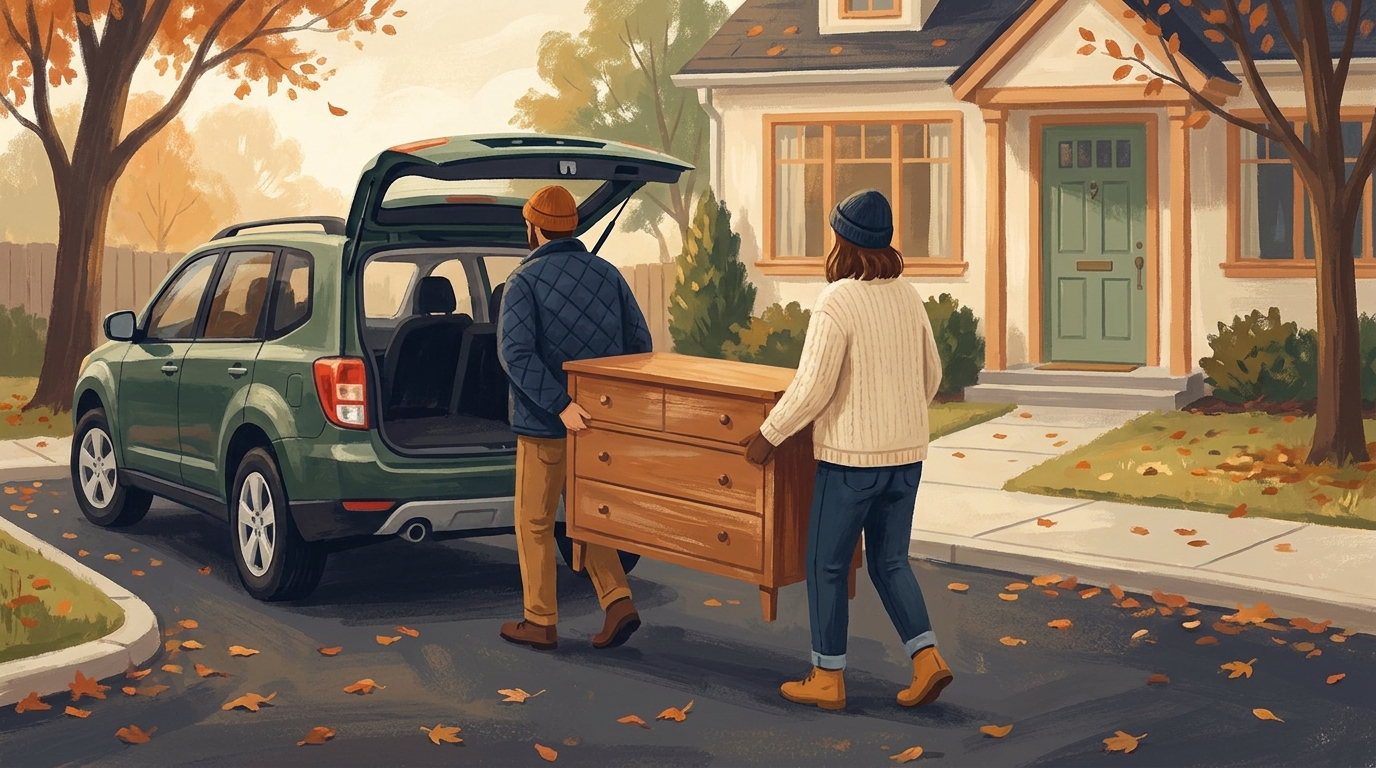
When you need to give away furniture for free, the hardest part is usually getting it out the door. You can donate to a charity that offers pickup, list it on a local sharing app, or schedule a bulk trash collection. The best choice depends on the item's condition and your timeline.
In short
- Check for safety recalls and structural damage before giving anything away.
- Take clear photos and measure the furniture to help people plan their pickup.
- Charities offer free furniture pickup for gently used items, but you may need to schedule weeks in advance.
- Local apps like StuffRescue connect you with neighbors who will pick up items directly from your home.
How to give away furniture for free (and when to throw it out)
Before you decide how to get rid of your old couch or dining table, you must evaluate its condition. The US Environmental Protection Agency (EPA) classifies furniture and furnishings as "durable goods," meaning they are products designed with a lifetime of three years or more. Wood and steel are the primary materials used, accounting for 58 percent of total furniture generation. Because these items are built to last, they are excellent candidates for rehoming, provided they are safe.
Safety is the absolute priority when giving items away. The US Consumer Product Safety Commission (CPSC) states that it is illegal to sell, offer to sell, or distribute a recalled product. This federal law applies to individuals giving items away for free to their neighbors, not just to retail stores.
Nursery and infant furniture require extra caution. The CPSC explicitly warns against donating broken or wobbly nursery furniture, especially cribs and bassinets. You should never give away any durable infant product that is missing parts, even if it has not been officially recalled. The CPSC's disposal rule is simple: if a piece of furniture is hazardous, does not comply with current safety standards, or has been recalled, it must be destroyed and thrown away. Their official guidance is, "When in doubt, throw it out!"
Finally, you should never give away upholstered furniture, mattresses, or wooden bed frames that show any signs of bed bugs. Givers should thoroughly inspect their furniture and dispose of infested items safely, following local health guidelines.
How to write a post that gets your furniture picked up
To convince someone to drive to your home and haul away a heavy dresser or a bulky armchair, you need to make the logistics as predictable as possible. A vague post with a blurry photo will often be ignored.
Taking the time to create a detailed listing ensures that the person who claims your item actually has the means to move it. For more tips on creating effective listings, you can read our guide on how to take listing photos and write posts that get your stuff rescued.
Take clear photos in good lighting
Open the blinds or turn on the overhead lights. Take a wide shot showing the entire piece of furniture, plus close-ups of the fabric, the wood grain, and any notable damage or wear.
Measure everything accurately
Use a tape measure to find the exact height, width, and depth of the item. A person picking it up needs to know if the furniture will fit in the back of their SUV and through their front door.
Be completely honest about the condition
Describe any scratches, water rings, stains, or wobbly legs. Honesty prevents a situation where someone arrives, changes their mind upon seeing the damage, and leaves you stuck with the furniture.
Detail the heavy lifting required
State clearly if the item is located on a second floor, if there are narrow stairs to navigate, or if the piece is so heavy that the person will need to bring a friend to help carry it.
Where to get rid of furniture for free: comparing your options
When you are ready to part with your items, you have several different avenues. The right choice depends on how quickly you need the space cleared and the quality of the furniture.
| Method | Best for | Pickup speed | Effort required |
|---|---|---|---|
| Local charities | High-quality, gently used items | Slow (often weeks) | Low (they bring a truck) |
| StuffRescue | Useful items in any safe condition | Fast (often same day) | Medium (coordinating with a neighbor) |
| Buy Nothing groups | Small community sharing | Variable | Medium (managing comments) |
| Social media marketplaces | Reaching a massive audience | Fast | High (dealing with haggling and no-shows) |
| City bulk pickup | Broken or unsalvageable items | Set by your city schedule | High (moving to the curb) |
How to schedule a donate furniture pickup with a charity
If your furniture is in excellent shape, a local charity might be willing to come to your home and pick it up. Organizations like Habitat for Humanity ReStore accept new and "gently used" furniture, appliances, and building materials to sell in their stores, funding their community housing projects.
Most Habitat ReStore locations offer free pickup services specifically for large, bulky items like furniture. However, because these trucks are in high demand, you must call your local store directly to confirm their operating hours and schedule a pickup time. You may have to wait several weeks for an available slot.
If you plan to claim a tax deduction for your donation, you must follow strict federal guidelines. The Internal Revenue Service (IRS) requires that donated clothing and household items, including furniture and furnishings, be in "good used condition or better" to qualify for a deduction.
The IRS notes that the fair market value of used furniture is usually much lower than the price you paid when it was brand new. Your tax deduction is based on this current fair market value, not your original purchase price. If your total contribution is worth $250 or more, you must obtain and keep a contemporaneous written acknowledgment (a receipt) from the charity that includes a description of the furniture.
There is a rare exception for items in poor condition: if you claim a deduction of over $500 for a single item that does not meet the "good condition" standard, you must include a qualified appraisal of that item with your tax return.
Giving directly to neighbors using StuffRescue
If you do not need a tax receipt and simply want the furniture out of your house quickly, giving it directly to a neighbor is highly effective. StuffRescue is a free way for neighbors to give things away and rescue what others no longer need. It is a registered nonprofit in the United States, and posting an item is always free.
To post your furniture, you simply tap the orange "Rehome an Item" button and add up to three photos. The app's autofill feature reads the photos and suggests a title, category, description, and condition, all of which you can edit. Nothing is for sale on the platform, meaning there is no selling, no haggling, and no cash exchanged between neighbors.
Privacy is built into the process. The map shows neighborhood circles with counts, never exact addresses or pinpoint locations. Only the person who claims your item gets the exact pickup spot, and this happens only after the rescue is confirmed. You can read more about how the free radius and pickup codes work to understand the secure handoff process. Please note that a StuffRescue gift to another person is not a tax-deductible donation.
Managing the handoff safely and smoothly
Once you have found a taker for your furniture, clear communication is the key to a successful pickup. Agree on a specific day and time in your chat, and confirm that they have a vehicle large enough to transport the item.
Before they arrive, prepare your home for the move. Clear a wide path from the furniture's location to your front door. Move small tables, floor lamps, and loose rugs out of the way to prevent tripping hazards and protect your walls from getting bumped. If the furniture has removable legs or drawers that slide out, take them off beforehand to make the piece lighter and easier to maneuver through doorways.
If you are using StuffRescue, remember that each rescue has a six-digit pickup code that only the two of you see. The rescuer will show or read it at the door, and you must check that it matches. If there is no match, there is no handoff. Once you confirm the code, you hand over the item and mark it as "Rehomed" in the app.
What to do when nobody wants your furniture
Sometimes, a couch is simply too worn out, or a massive entertainment center is too difficult to move. If charities decline the donation and neighbors pass on the listing, you will have to dispose of the furniture.
Because these items are oversized and bulky, the EPA notes that municipal solid waste (MSW) facilities often pick up durable goods like furniture separately, rather than mixing them with standard household trash.
You should check with your city or county government about their bulk trash collection rules. Many municipalities offer a few free bulk pickup days per year for residents, while others require you to schedule an appointment or pay a small disposal fee. Never drag furniture to the curb without confirming your local regulations first, as illegal dumping can result in significant fines and creates an eyesore for your community.
Can I get a tax deduction for giving furniture to a neighbor?
No. To claim a tax deduction, you must donate the furniture to a qualified tax-exempt organization (like a registered charity), and the item must be in good used condition or better. Giving items directly to individuals does not qualify for a tax deduction.
Will charities take furniture with minor damage?
Usually not. Organizations like Habitat for Humanity ReStore require furniture to be gently used and in good working order. If an item needs structural repairs, extensive upholstery work, or is missing parts, charities will generally decline the donation because they cannot sell it.
Do I have to help someone carry the furniture they are picking up?
No. When you give away an item, the person picking it up is responsible for moving and transporting it. Always state in your listing if the item is heavy or involves stairs so they know to bring a friend to help them lift it.
Is it safe to leave furniture on the curb with a "free" sign?
Leaving items on the curb can violate local dumping ordinances and result in fines. It also exposes the furniture to rain, dirt, and pests, often ruining it before anyone can claim it. It is much better to arrange a direct pickup through a local sharing app or schedule a bulk trash collection with your city.
Sources
- US EPA — Durable Goods: Product-Specific Data
- US CPSC — Resale/Thrift Stores Information Center
- US CPSC — Resellers Guide
- Habitat for Humanity — Donate goods to Habitat for Humanity ReStore
- Habitat for Humanity — Does Habitat ReStore offer furniture donation pickup?
- IRS — Publication 561, Determining the Value of Donated Property
- IRS — Special rules apply to donated property
- IRS — Topic no. 506, Charitable contributions
- US EPA — Methodology Document for Selected Municipal Solid Waste Products
Published by StuffRescue, a US nonprofit based in Akron, Ohio. Spotted something out of date? Email info@stuffrescue.co.
More guides on giving things away

Giving things away
How to take listing photos and write posts that get your stuff rescued
Listing photo tips for giving away stuff: three daylight shots, a plain title, honest condition notes, and what to check after StuffRescue autofill drafts.

Giving things away
How to get rid of a couch in Akron without paying to haul it
How to get rid of a couch in Akron: give a usable one to a neighbor who picks it up, or put a worn-out one out for city large-item pickup.
Helping survivors & shelters
How Domestic Violence Advocacy Organizations Actually Source Household Goods for Survivors
How domestic violence shelters get donations in Ohio: the real mix of drives, wishlists, vouchers, and partnerships advocates use — and what's changing.