
Giving things awayLast reviewed 8 min read
Giving Tuesday Without Money: Ways to Give Things, Time and Skills
Looking for Giving Tuesday ideas that don't cost a thing? Learn how to donate items, volunteer your time, and give back to your community this year.

Giving Tuesday is December 1, 2026, and the best giving tuesday ideas do not require a credit card. You can participate in Giving Tuesday without money by donating useful household items, volunteering your time, lending your professional skills, or organizing a small drive for local organizations.
In short
- Give away things you no longer need to neighbors or local charities.
- Volunteer your time or professional skills to a cause you care about.
- Check safety guidelines before donating furniture or electronics.
- Organize a small drive for specific items requested by local groups.
What are the best giving tuesday ideas that don't cost money?
Giving Tuesday falls on December 1, 2026, and it is a perfect time to focus on generosity that goes beyond financial contributions. The movement was created in 2012 as a simple idea to encourage people to do good, growing into a year-round global generosity movement, according to GivingTuesday.org.
While many organizations run fundraising campaigns on this day, the core of the movement is about community care. You do not need a large budget to make a meaningful impact. Some of the most valuable contributions you can make involve your time, your skills, and the useful items you already have in your home.
When you focus on giving tuesday without money, you open up creative ways to support your neighbors. A gently used winter coat, a few hours spent sorting food at a pantry, or offering your professional skills to a nonprofit can be just as impactful as a cash donation. The goal is simply to participate in a culture of generosity in whatever way fits your current situation.
How can I donate items giving tuesday?
One of the most practical ways to give back is to look around your home for things you no longer use but that still have plenty of life left in them. Many of us have closets full of clothes we do not wear, kitchen appliances we do not use, or furniture taking up space in the basement.
When you donate items giving tuesday, you keep usable goods out of the landfill and put them directly into the hands of someone who needs them. You can give these items to local thrift stores, community centers, or directly to neighbors.
StuffRescue is a free way for neighbors to give things away and rescue what others no longer need. It is open in every US state and allows you to rehome items locally. Nothing is for sale on the platform, and the giver never pays. You simply snap a few photos, post the item, and a neighbor can claim it. If you want to learn more about the logistics, you can read about how the free radius and pickup codes work.
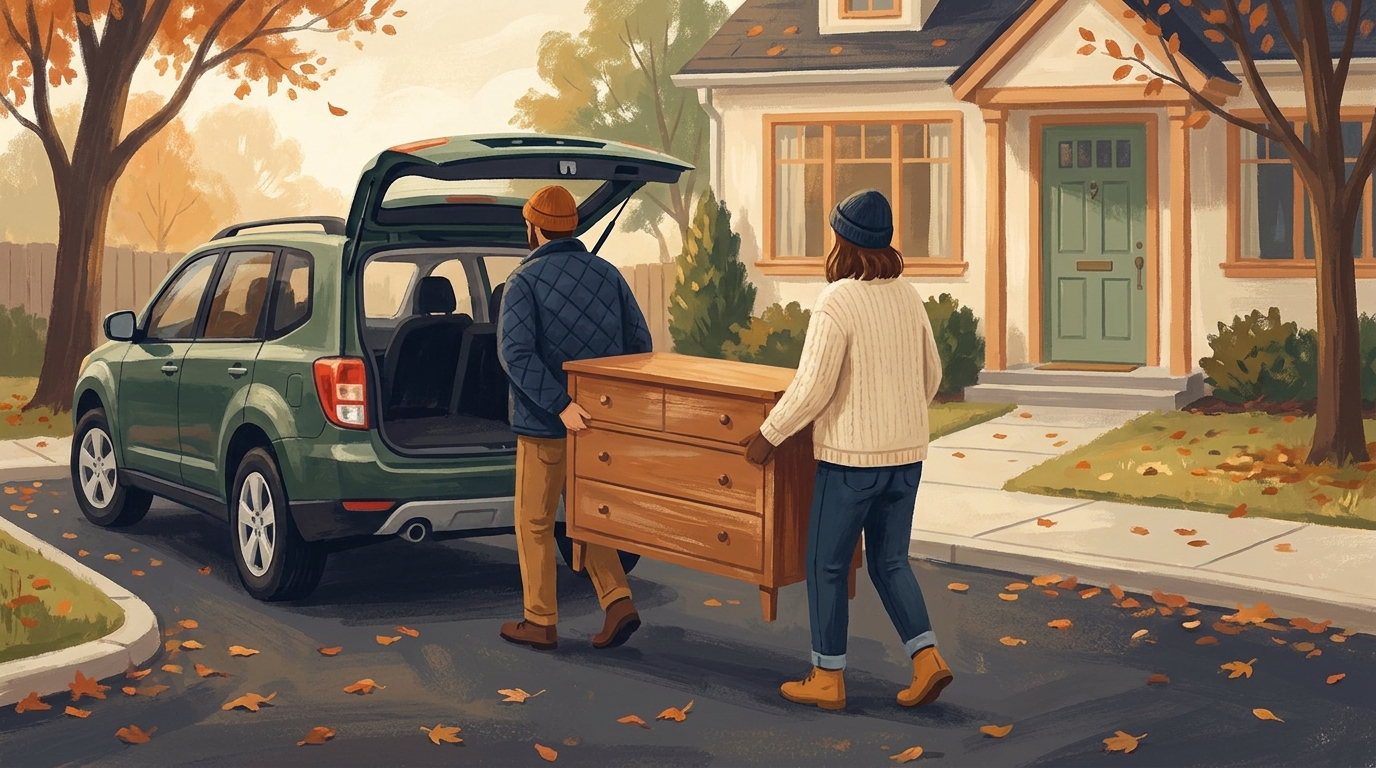
Giving directly to a neighbor means your item goes straight to someone who will use it, without any middleman. It is a simple, dignified way to help someone furnish an apartment, clothe their children, or stock their kitchen without anyone having to explain their financial situation.
What should I check before giving things away?
Before you box up items to give away, it is important to ensure they are safe and functional. Giving an item that is broken, missing parts, or unsafe creates a burden for the person or organization receiving it.
The US Consumer Product Safety Commission (CPSC) states that it is a violation of federal law to sell or donate recalled products, or products that do not meet current safety standards. This rule applies to charities, thrift stores, and individuals giving away used products for free.
If you are giving away electronics, the US Environmental Protection Agency (EPA) encourages donating used, operating electronics to extend their useful life and keep them out of the waste stream. However, you must protect your privacy and ensure safe handling. Before donating electronics, the EPA advises deleting all personal information and removing batteries, as batteries may need to be recycled separately.
Always inspect your items honestly. If a chair is missing a leg, a sweater is heavily torn, or a coffee maker no longer turns on, it is better to recycle or dispose of it properly rather than passing it on.
Are there ways to give back through volunteering?
Volunteering your time is a cornerstone of community support. You can choose between formal volunteering with an established organization or informal volunteering by directly helping those around you.
According to data from AmeriCorps and the US Census Bureau, over 28 percent of Americans formally volunteered through an organization between September 2022 and September 2023. Formal volunteering often involves structured roles, such as serving meals at a shelter, walking dogs at an animal rescue, or tutoring students after school. These organizations rely heavily on volunteers to keep their operations running smoothly.
If you have specific professional skills, consider skills-based volunteering. Nonprofits often need help with graphic design, accounting, legal advice, or web development but cannot afford to hire staff for these roles. Offering your expertise for a few hours can save an organization thousands of dollars.
Informal volunteering is just as important. The same AmeriCorps report notes that in 2023, 54 percent of Americans helped their neighbors informally, a meaningful increase from previous years. This could mean shoveling a driveway for an elderly neighbor, offering to babysit for a single parent so they can run errands, or organizing a community cleanup on your street.
Can I deduct volunteer time on my taxes?
When you spend hours helping a charity, you might wonder if that time counts toward your tax deductions. The rules around volunteering and taxes are very specific.
According to IRS Publication 526, you cannot deduct the value of your time or services given to a qualified charity. Even if you are a highly paid professional offering your services for free, the monetary value of that time is not tax-deductible.
However, you can deduct unreimbursed, out-of-pocket expenses directly connected to your volunteer services. The IRS states this includes the cost of gas to get to and from the volunteer site, or buying and cleaning uniforms that are not suitable for everyday use.
If you plan to claim these out-of-pocket expenses, you must keep detailed records and receipts. The expenses must be directly related to the volunteering and cannot be for your personal benefit. Always check with a certified tax professional or review the official IRS guidelines to ensure you are following the current rules for your specific situation.
How do I organize a small donation drive?
If you want to multiply your impact on Giving Tuesday, organizing a small donation drive is an excellent project. A drive brings people together and pools resources to meet a larger need in your community.
Instead of collecting random items, the most successful drives focus on exactly what local organizations need right now. Shelters and pantries often lack specific basics, and receiving items they cannot use creates extra work for their staff.
Identify a specific need in your community
Check StuffRescue's Wish Program, where verified nonprofits, churches, schools, and agencies post campaigns with lists of specific needs. This ensures you are collecting items that will actually be used.
Set clear dates and goals
Choose a start and end date for your drive. Keep it short, such as one or two weeks, to create a sense of urgency.
Spread the word to your network
Tell your coworkers, friends, or faith group exactly what you are collecting. Share the specific list of requested items so people know what to bring.
Provide a convenient drop-off spot
Set up a clearly labeled box in a breakroom, a porch, or a community hall where people can easily leave their contributions.
Deliver the items promptly
Once the drive ends, sort the items, ensure they are clean and in good condition, and deliver them to the organization as planned.
Organizing a drive does not require money, just a bit of coordination and communication. It is a powerful way to turn a single act of giving into a community-wide effort.
Which giving option is right for me?
Choosing how to participate depends entirely on your schedule, your physical abilities, and what you have available. There is no wrong way to give back.
| Giving Method | Best For | Time Required | Impact |
|---|---|---|---|
| Donating Items | People decluttering their homes | Low (Sorting and posting/dropping off) | Provides immediate, tangible goods to neighbors or charities |
| Formal Volunteering | People who want a structured role | Medium to High (Usually requires a set schedule) | Directly supports the daily operations of a nonprofit |
| Informal Helping | People with unpredictable schedules | Low to Medium (Done as needed) | Builds strong, resilient neighborhood connections |
| Skills-Based Giving | Professionals with specialized expertise | Medium (Project-based) | Saves organizations significant operational costs |
Whether you choose to pass on a piece of furniture, spend an afternoon sorting donations, or help a neighbor carry their groceries, your contribution matters. Giving Tuesday is a reminder that generosity is a mindset, not a transaction.
When is Giving Tuesday this year?
Giving Tuesday falls on December 1, 2026. It is celebrated annually on the Tuesday following Thanksgiving.
Can I donate broken electronics?
The EPA encourages donating used, operating electronics. If an item is broken and cannot be easily repaired, it is usually better to recycle it through a certified e-waste program rather than donating it.
Do I need to clean items before donating?
Yes. Whether you are giving an item to a neighbor or a charity, it should be clean and ready to use. Wipe down furniture, wash clothing, and ensure all parts are included.
Are StuffRescue gifts tax-deductible?
No. A StuffRescue gift to another person is not a tax-deductible donation. The platform connects neighbors directly, which does not qualify for charitable tax deductions.
Sources
Published by StuffRescue, a US nonprofit based in Akron, Ohio. Spotted something out of date? Email info@stuffrescue.co.
More guides on giving things away
Giving things away
How to Give Away Furniture for Free (and Actually Get It Picked Up)
Learn how to give away furniture for free, arrange a safe pickup, and compare donation options like local charities, StuffRescue, and bulk trash

Giving things away
How to take listing photos and write posts that get your stuff rescued
Listing photo tips for giving away stuff: three daylight shots, a plain title, honest condition notes, and what to check after StuffRescue autofill drafts.

Giving things away
How to get rid of a couch in Akron without paying to haul it
How to get rid of a couch in Akron: give a usable one to a neighbor who picks it up, or put a worn-out one out for city large-item pickup.