
Helping survivors & sheltersLast reviewed 6 min read
What Condition Does Furniture Need to Be In to Donate to a Domestic Violence Shelter?
Guidelines on donating furniture to a domestic violence shelter: what clean, safe, pest-free condition means, plus a self-check before you load the truck.
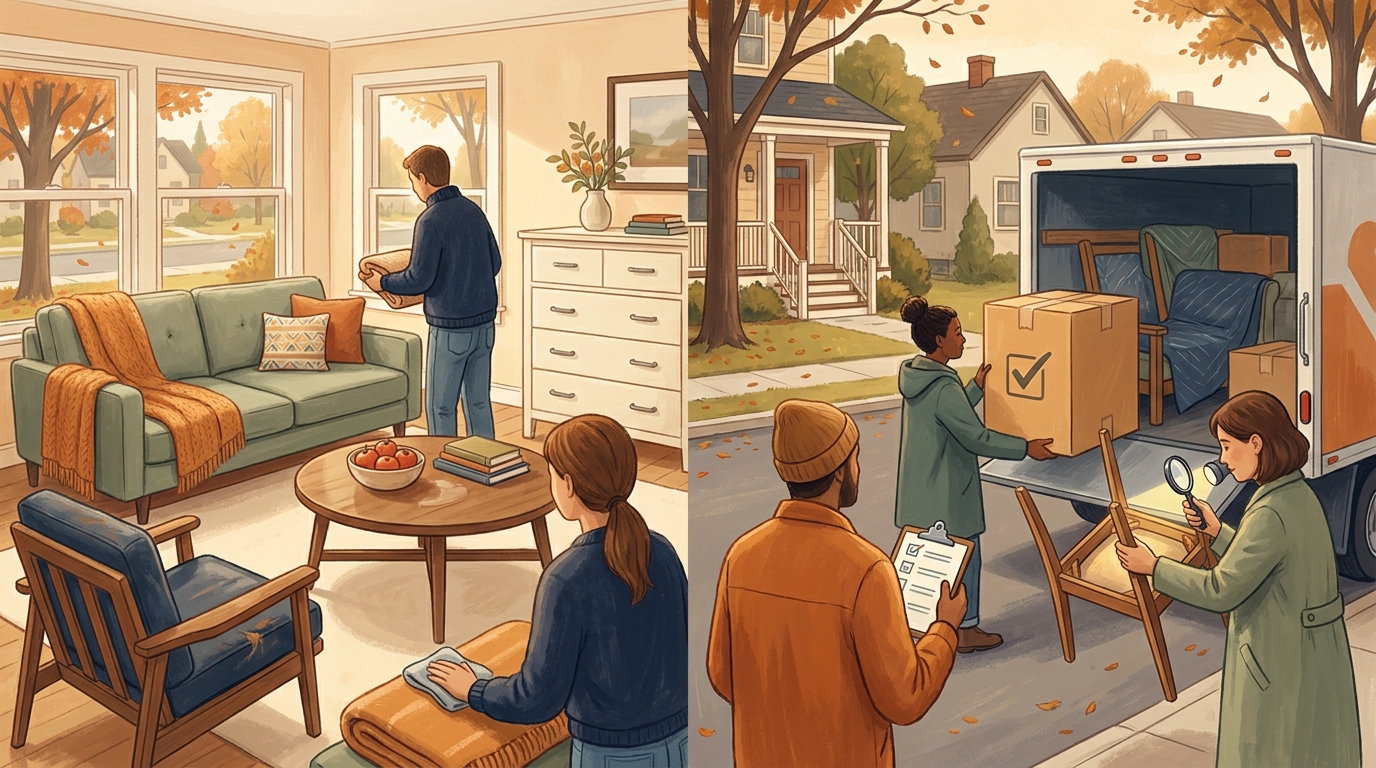
Furniture donated to a domestic violence shelter generally needs to be clean, structurally sound, and free of stains, odors, and pests — and for cribs or baby gear, it needs to meet current federal safety standards.
A couch with a broken frame, a mattress with any sign of bed bugs, or a drop-side crib will almost always get turned down, no matter how good the intention behind it is.
This guide is for anyone standing next to a dresser, couch, or crib wondering if it's good enough to give. It walks through the general guidelines for donating furniture to a domestic violence shelter, why shelters are strict about condition, and how to check your own stuff honestly before you make the trip. These same furniture donation guidelines hold true whether the shelter is in Akron or across the country.
What condition does donated furniture need to be in?
Most domestic violence shelters use the same baseline as any reputable donation center: clean, dry, sturdy, and free of damage that would make the item unsafe or unusable for the next family. Habitat for Humanity ReStore, for example, tells donors that furniture should be "gently-used or like-new condition," and The Salvation Army asks specifically for "unbroken" furniture, noting that what's accepted can vary by location and current need. A domestic violence shelter is furnishing a home for someone starting over, often fast — the furniture needs to work the day it arrives, not need repair. These furniture donation guidelines exist to protect that family, not to make donating harder than it has to be.
Can I donate furniture with stains, odors, or pet hair?
No — stained, smelly, or pet-hair-covered furniture is one of the most common reasons shelters decline a donation. A shelter is setting up a living space for people who didn't choose to be there, and secondhand doesn't mean lived-in by someone else in an obvious way. Wipe it down, check under cushions, and be honest about whether you'd want to sit on it yourself.
Will a shelter accept a couch or mattress with rips, sagging, or broken frames?
Generally no. A torn cushion, a sagging frame, or a wobbly leg isn't just cosmetic — it's a safety and durability problem for a household that can't easily replace it again in a month. Many shelters won't take used mattresses at all, for sanitation reasons, so it's worth asking before you load one into a truck. If a piece needs a repair you haven't already made, assume it's not donation-ready.
Is it ever okay to donate furniture if there might be bed bugs?
No, never — this is a hard line, not a judgment call to make yourself. According to the CDC, signs of bed bugs include shed exoskeletons, rust-colored stains, and a musty odor, usually found in the seams of mattresses, upholstered furniture, and headboards. Check every seam and corner before you donate anything upholstered, and if you've had an infestation in your home recently, don't risk moving any soft furniture out of it at all — not to a shelter, not to a neighbor.
What safety standards apply to donating a crib or baby furniture?
Cribs carry the strictest condition bar of anything on this list, because the standards changed and older cribs can be genuinely dangerous. The Consumer Product Safety Commission's safe-sleep guidance calls for "bare is best" — a crib with nothing but a fitted sheet, no drop-side rail, no missing hardware, and no open recall. Before donating any crib, bassinet, or play yard, check the model against SaferProducts.gov; if you can't confirm it's compliant, it's safer to recycle the wood and metal than to pass along a sleep hazard — that keeps it out of a landfill too, just a different way.
Condition checklist before you donate
| Furniture type | What most shelters require | Common reason for rejection |
|---|---|---|
| Sofas & upholstered chairs | Clean, dry, no rips, sagging frame, or odor | Stains, pet odor, bed bug signs in seams |
| Mattresses & box springs | Many shelters don't accept used mattresses at all — ask first | Sanitation risk, bed bug risk |
| Dressers & tables | Sturdy, drawers slide freely, no water damage or warping | Broken legs, missing hardware, mold |
| Cribs & baby furniture | Meets current CPSC safety standard, no drop-side, no open recall | Recalled model, missing slats, drop-side design |
| Bed frames | Solid joints, all hardware included | Wobbly frame, missing bolts |
Where StuffRescue fits
StuffRescue is a free-items giving platform piloting in Akron, Ohio — neighbors give, neighbors rescue, and we never ask anyone to prove need before they rescue something free. StuffRescue doesn't run shelter intake and doesn't set a shelter's furniture donation guidelines. If your couch or dresser doesn't quite meet a shelter's condition standard, it can usually still help a neighbor directly: post it and anyone within three miles can rescue it free, no application and no shame on either end, and it stays out of a landfill either way. If it does meet a shelter's standard, call the shelter first, confirm what they need right now, and give it that way — see how the Giving Loop works if you want the fuller picture of how a rescue happens start to finish. We'd rather send you to the right place than collect a post that doesn't belong on StuffRescue.
We'd also like to hear from domestic violence shelters and other community organizations working in Akron. If your organization already supports neighbors who could use a clean dresser, a sturdy bed frame, or a crib that meets current safety standards, reach out about partnering through the Wish Program — a straightforward way to post a Wish for what the people you already serve need, shown with the same dignity as every other post on StuffRescue.
Join StuffRescue free to be first in line when rescuing opens in your neighborhood.
Frequently asked questions
Can I donate a used crib to a domestic violence shelter?
Only if it meets current federal crib safety standards — no drop-side design, no missing hardware, and no history of recall. Many shelters ask that cribs be nearly new or purchased new specifically because of these rules, so call ahead before you bring one.
What furniture do domestic violence shelters usually turn down?
Most shelters decline furniture that's torn, heavily stained, structurally unstable, or shows any sign of bed bugs or other pests, and many won't take used mattresses at all. Calling the shelter or your local domestic violence hotline before you make the trip saves everyone a wasted drive.
Do I need to clean furniture before donating it to a shelter?
Yes. Furniture should be wiped down, free of pet hair and odor, and checked for pests before it leaves your home — most shelters treat this as a baseline requirement, not an extra courtesy.
Why don't domestic violence shelters list a donation drop-off address online?
Most shelters keep their physical location private to protect the safety of the people staying there, so donations are typically coordinated by phone, a secure drop point, or a partner organization rather than a public address.
Sources
Published by StuffRescue, a US nonprofit based in Akron, Ohio. Spotted something out of date? Email info@stuffrescue.co.
More guides on helping survivors & shelters

Helping survivors & shelters
What Domestic Violence Shelters Need Most in Winter
Learn what domestic violence shelter donations are needed most in winter, why you must use drop-off centers, and how to give safely.
Helping survivors & shelters
How Domestic Violence Advocacy Organizations Actually Source Household Goods for Survivors
How domestic violence shelters get donations in Ohio: the real mix of drives, wishlists, vouchers, and partnerships advocates use — and what's changing.
Helping survivors & shelters
How to Start a Donation Drive for a Domestic Violence Shelter at Your Akron Workplace or Church
How to start a donation drive for a domestic violence shelter in Akron: what to ask first, what to collect, what to skip, and how to hand it off.