
Helping survivors & sheltersLast reviewed 7 min read
How to Start a Donation Drive for a Domestic Violence Shelter at Your Akron Workplace or Church
How to start a donation drive for a domestic violence shelter in Akron: what to ask first, what to collect, what to skip, and how to hand it off.
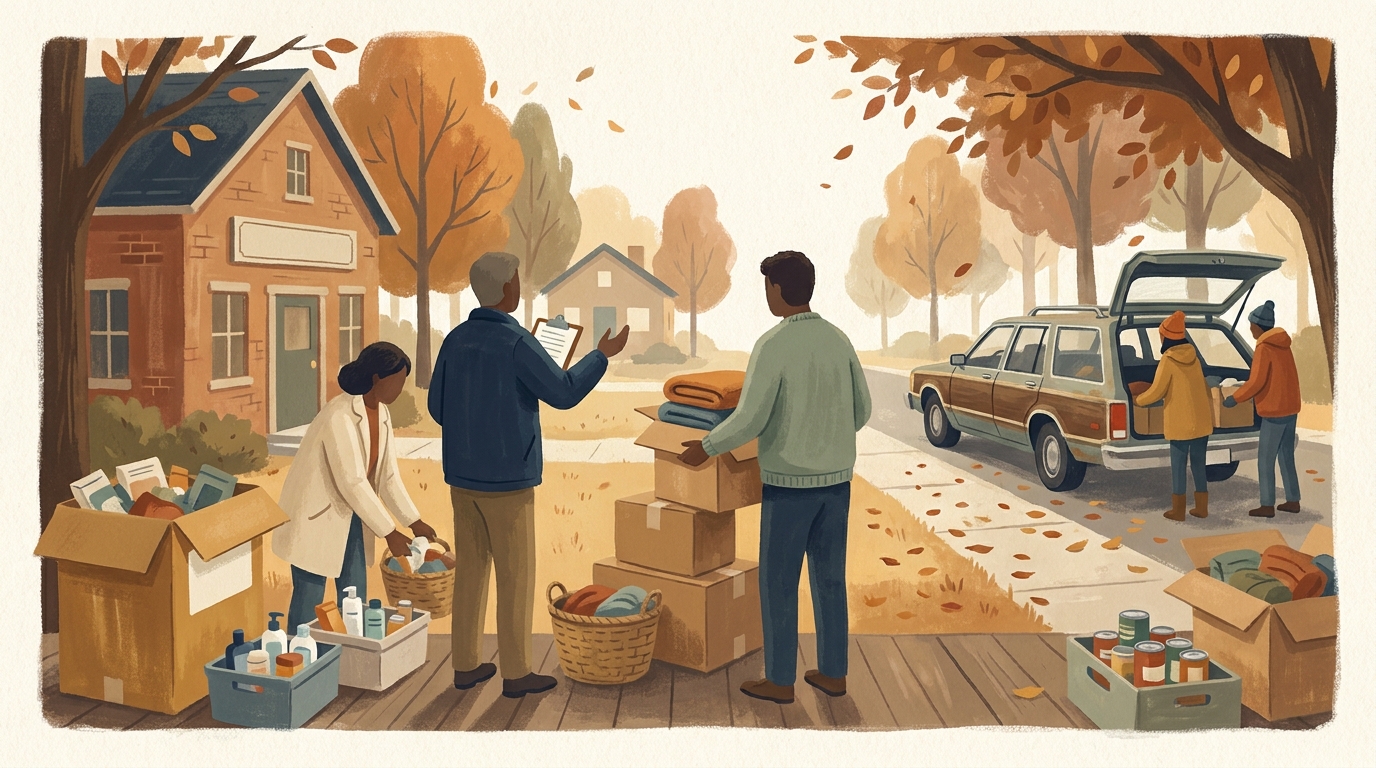
To start a donation drive for a domestic violence shelter in Akron, call Hope & Healing Survivor Resource Center first to confirm what they can currently accept — right now, new items from their Amazon Wishlist only, not a general collection box — then build the drive around that, promote it without naming anyone, and hand off through the shelter's own channel.
This guide is for anyone who's already said "let's do a drive" at work, at church, or in a community group. It covers what to ask Hope & Healing before you collect a single item, how to plan and promote the drive, what to leave off your list, and how to hand everything off safely.
What should I ask the shelter before starting a donation drive?
Ask two things: what's needed right now, and whether a group drive can be accepted at all. Shelter capacity and intake policies shift, so the answer this month may not hold next month.
As of this writing, Hope & Healing Survivor Resource Center — the Akron-area agency formerly known as the Battered Women's Shelter and Rape Crisis Center of Medina and Summit Counties — says it's accepting in-kind item donations only through its Amazon Wishlist, due to limited capacity. That fact should shape your whole drive: a box of mixed, gently-used coats might not be something staff can take in right now. Call the development line (330-374-0740 x1107) or email development@hope-healing.org before announcing anything, and ask directly whether a bulk donation can be arranged.
How do I plan and promote a workplace or church donation drive in Akron?
Build the drive around that answer, set a 2–4 week window, and name one point of contact. Promote it through channels you already have — a break room flyer, a church bulletin insert, a Slack or email blast — using the organization's public name and city, never a street address.
Keep the ask specific. "Help Hope & Healing restock their Amazon Wishlist" gives people something concrete, the way "new socks, diapers, and gift cards" beats "donate anything you can." A specific ask also makes intake faster for the staff sorting whatever your group hands over.
What are the steps to start a donation drive for a domestic violence shelter in Akron?
- Call or email the shelter first. Confirm what's needed and whether a group donation can be accepted this month.
- Pick a format that matches that answer. A "wishlist sprint" (your group splits the current Amazon Wishlist), a pre-approved collection box, or a gift-card/cash collection are the usual options.
- Set a window and a point of contact. Two to four weeks is typically enough to build momentum.
- Promote with specifics, not stories. Name the organization and the general need; never a resident, a family, or a location.
- Post a do-not-collect list next to the ask. See below — it prevents the most common sorting headache for staff.
- Sort and count before handoff. Group like items and remove anything that needed to be new.
- Hand off through the shelter's official channel only. Schedule it through the development line — never by showing up at a location you found or guessed.
What items should a shelter donation drive collect — and what should I leave out?
Collect only what the shelter confirmed it can use; when in doubt, gift cards and funds for staff to spend are almost always welcome. Leave out anything used that should be new, anything damaged, and anything that could identify a specific person's situation.
Specifically skip: used undergarments or bras, opened or partially used toiletries, expired food, mattresses or upholstered furniture (most shelters can't store or sanitize these, and Hope & Healing isn't currently taking in-kind items outside its Wishlist at all), anything resembling a weapon, and any card or note naming a resident. A drive that collects the wrong things isn't a failure of generosity — it just means the "ask first" step got skipped, so staff spend time re-sorting instead of helping someone that week.
How do I hand off donations without compromising the shelter's location?
Never deliver to an address you found online or were told informally — shelter locations stay confidential to protect residents, and that's a safety measure, not red tape. Schedule every drop-off, shipment, or wishlist purchase through the organization's published phone line, email, or website.
If your group collected physical items the shelter pre-approved, ask the development team where and how they want it delivered. If your group went the gift-card or wishlist route instead, there's nothing to hand off in person: cards can be mailed, and wishlist purchases ship straight to the organization.
Comparing drive formats for a workplace or church group
| Drive format | Cost to your group | Setup time | Best for | Catch |
|---|---|---|---|---|
| Wishlist sprint (team buys from Hope & Healing's Amazon Wishlist) | Price of items, split among givers | About a day to organize | Groups who want zero guesswork | Only works while the shelter's wishlist stays current — recheck it |
| Pre-approved new-item collection box | Free to run | 1–2 weeks of promotion | Offices or churches with steady foot traffic | Must be approved by the shelter first; new items only |
| Gift card or cash collection | Any amount | A few days | Fast-moving groups, flexible needs | Less tangible for your team to see in the moment |
| StuffRescue Wish Program (pending availability — see below) | Pay-what-you-want, $0.99 floor, charged only on success | Days once a Wish Partner is live | Routing one specific collected item straight to a neighbor | Pilot stage — confirm current availability with StuffRescue before counting on it |
Where StuffRescue fits
StuffRescue is a free, neighbor-to-neighbor giving platform piloting in Akron: anyone can post what they no longer need, and a neighbor nearby can rescue it — free within three miles, 99 cents beyond that, charged only when a rescue succeeds. It's separate from Hope & Healing, built for the everyday "I have a couch, someone nearby needs one" exchange, not a replacement for a shelter's wishlist or hotline.
If your group is already organizing a drive, it's worth asking one more question: whether some of what you collect could go directly to a specific neighbor who needs it, rather than only into a general bin. That's the idea behind StuffRescue's Wish Program — a local advocacy partner posts one specific, needed item, with no name or story attached, and a neighbor gives toward exactly that. If that sounds like a fit for a future drive, reach out to StuffRescue about the Wish Program first — it's a newer part of the model, still being set up with local partners, so confirm what's currently available before planning around it. Join StuffRescue free to hear when Wish Partners come online.
Frequently asked questions
Do I need the shelter's permission before starting a donation drive?
Yes. Contact Hope & Healing's development team before promoting anything — what they can accept changes with capacity, and right now that's limited to their Amazon Wishlist.
What items should I never include in a domestic violence shelter donation drive?
Never collect used undergarments, opened toiletries, expired food, mattresses or upholstered furniture, anything resembling a weapon, or any note naming a resident. "New items only" is a firm rule, not a suggestion.
Can my workplace or church drop donations off at the shelter in person?
No. Shelter locations stay confidential to protect residents, so every legitimate drop-off is scheduled through the organization's phone line, email, or shipping instructions, never a found address.
How long should a donation drive run?
Two to four weeks is usually enough to build momentum without the collection box sitting untouched. A shorter, well-promoted window beats an open-ended one that fades out.
What if my group would rather collect money than items?
That's often easiest. Gift cards and cash let Hope & Healing's own staff fill whatever gap is most urgent that week, and both are simple to mail or submit through the Ways to Give page.
What is StuffRescue's Wish Program, and can my drive use it?
It's a part of StuffRescue where a verified local advocacy partner posts one specific, needed item so a neighbor can give toward it, with no identifying details. It's still being set up with local partners, so check current availability before planning a drive around it.
Sources
Published by StuffRescue, a US nonprofit based in Akron, Ohio. Spotted something out of date? Email info@stuffrescue.co.
More guides on helping survivors & shelters
Helping survivors & shelters
How Domestic Violence Advocacy Organizations Actually Source Household Goods for Survivors
How domestic violence shelters get donations in Ohio: the real mix of drives, wishlists, vouchers, and partnerships advocates use — and what's changing.
Recycling & disposal
What StuffRescue Can't Take: A Guide to Household Hazardous Waste Disposal in Akron
StuffRescue won't take paint, propane, or chemicals. Here's where household hazardous waste disposal in Akron actually goes, and what fits a neighbor.
Moving & cleanouts
Moving Out of Akron? What to Do With Leftover Furniture
Stuck with furniture when moving out of Akron? See what movers won't haul, Akron bulk pickup rules, and the fastest free way to give it to a neighbor.