
Moving & cleanoutsLast reviewed 8 min read
Fall Garage Cleanout: What to Give Away, Recycle or Throw Out
Planning a fall garage cleanout? Learn what to do with garage clutter, how to safely dispose of hazardous waste, and where to give away tools and gear.
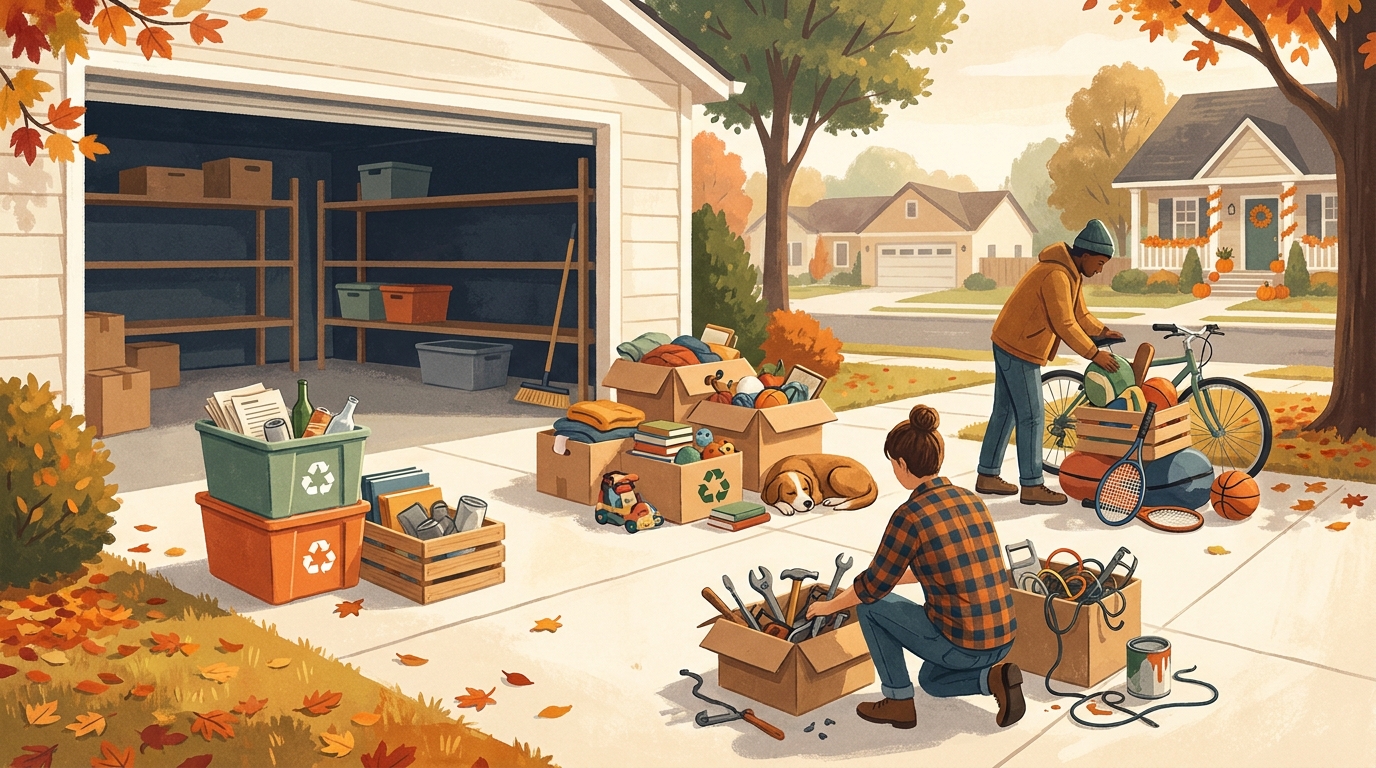
A fall garage cleanout is the perfect time to reclaim your space before winter. By sorting your items into three piles—give away, special disposal, and trash—you can easily clear out old tools, sports gear, and chemicals. Knowing exactly what to do with garage clutter makes the process fast and safe.
In short
- Sort everything into three clear zones: give away, hazardous waste, and trash.
- Usable tools, lawn equipment, and building materials can often be rehomed or donated to local stores.
- Never throw paint, motor oil, or pesticides in the regular trash; use local drop-off events.
- Check for product recalls before passing on power tools or lawn equipment.
How to start your fall garage cleanout
Tackling a messy garage can feel overwhelming, especially when years of holiday bins, half-finished projects, and outgrown bicycles have piled up. A successful fall cleanout checklist relies on making quick decisions and physically moving items out of their usual spots. Pick a dry, crisp autumn weekend and pull everything out into the driveway if the weather allows. This forces you to handle every single object and prevents you from simply shuffling boxes from one corner to another.
Set up distinct sorting zones before you begin. Having a visual separation helps keep the momentum going when you are deep into the project.
Create your sorting zones
Designate separate areas in your driveway for items to give away, items that require special recycling, and pure trash.
Empty the space systematically
Take everything off the shelves and out of the corners, working section by section, so you can see exactly what you have.
Group similar items together
Put all the hand tools in one spot, sports gear in another, and liquids in a third to make evaluating duplicates easier.
Clean the empty garage
Sweep the floors, clear away cobwebs, and wipe down the shelving before you put the keepers back in their place.
Deciding what to keep and what to let go
When deciding what to do with garage clutter, honesty is your best tool. Garages easily become holding zones for items we intend to fix, hobbies we plan to start, and duplicates we forgot we owned. Apply the "one-year rule" to sports equipment, gardening tools, and camping gear: if you have not used it in the past twelve months, and it does not have a specific seasonal purpose you are actively planning for, it is time to let it go.
Look closely at your multiples. You probably only need one good leaf rake, one reliable snow shovel, and a basic set of screwdrivers. Extra tools take up valuable wall space. Similarly, evaluate holiday decorations. If you have bins of lights that only half-work or yard inflatables you no longer put up, move them to the giveaway or trash pile rather than storing them for another winter.
Where to give away usable garage items
Items that still have life left in them should find a new home rather than a landfill. Hand tools, lawnmowers, rakes, shovels, and bicycles are always in high demand. If you have leftover home remodel materials, such as unused lumber, doors, or lighting fixtures, consider taking them to a Habitat for Humanity ReStore. These independently owned nonprofit home improvement stores accept new and gently used building materials, appliances, and household goods. The proceeds from their sales help fund affordable housing.
For smaller items, sports gear, or things you want to hand off directly to a neighbor, StuffRescue is a free way for neighbors to give things away and rescue what others no longer need. It is a registered nonprofit in the United States, and nothing is for sale: there is no selling, no haggling, and no cash between neighbors. You simply post a photo and a description, and a neighbor comes to pick it up. If you are new to the platform, you can learn how the free radius and pickup codes work before you begin. Taking clear pictures of your items in good lighting will help them find a taker quickly; you can read more about how to take listing photos and write posts that get your stuff rescued.
If you are giving away garage furniture, such as an old workbench or a patio chair, StuffRescue guidelines note that givers should check furniture for bed bugs and never list an item with signs of them.
Navigating product recalls and safety rules
While giving away old items is a great way to clear space, safety must come first. Older power tools, space heaters, and motorized lawn equipment can develop electrical faults or may have been recalled by the manufacturer years ago.
Additionally, safety gear degrades over time. The Consumer Product Safety Commission (CPSC) recommends that you do not resell or donate bicycle helmets that are more than five years old. The foam inside the helmet loses its ability to absorb impact, even if the helmet looks perfectly fine on the outside. Cut the straps off old helmets before throwing them away so they cannot be salvaged and worn by someone else.
How to handle household hazardous waste
Garages tend to accumulate half-empty bottles of chemicals, old cans of paint, and automotive fluids. The EPA classifies leftover household products that can catch fire, react, explode, or are corrosive or toxic as Household Hazardous Waste (HHW). Common garage items in this category include latex and oil-based paints, paint thinners, motor oil, antifreeze, auto batteries, pesticides, and pool chemicals.
Improper disposal of these items is highly dangerous. Pouring these chemicals down the drain, dumping them on the ground, or throwing them in the regular trash can cause physical injury to sanitation workers, contaminate septic systems, and pollute groundwater.
The EPA strongly encourages residents to use local HHW collection programs or periodic drop-off events rather than discarding these items in the trash. Local solid waste management districts can provide specific drop-off locations. Group these items in a sturdy cardboard box lined with a plastic bag, ensuring all lids are tightly sealed, and drive them to your local hazardous waste facility.
What belongs in the trash or recycling bin
Once you have separated the usable items and the hazardous chemicals, you are left with the true trash and basic recyclables. Cardboard boxes from old deliveries, empty plastic bins that have cracked, and rusted, broken hand tools that cannot be repaired belong in this pile. Flatten all cardboard to save space in your recycling bin.
If you have latex paint that has completely dried out into a solid block, many municipalities allow you to throw it in the regular trash with the lid off, but always check with your city or county first. Empty plastic motor oil bottles usually cannot be recycled due to the chemical residue and must go in the trash. Sorting this pile correctly ensures your regular trash pickup goes smoothly and keeps unrecyclable materials out of the local recycling stream.
Are donations of garage items tax-deductible?
If you choose to do a garage declutter donate run to a registered charity, you may be able to claim a tax deduction for your contributions. According to the IRS, you can generally deduct the "fair market value" of the property you donate to qualified organizations. Fair market value is what a willing buyer would pay a willing seller for the item in its current condition.
For any donated property valued at $250 or more, the IRS requires you to obtain and keep a contemporaneous written acknowledgment from the charity that includes a description of the items contributed. It is a good idea to take photos of high-value items, like riding lawnmowers or large tool chests, before you drop them off.
Keep in mind that a StuffRescue gift to another person is not a tax-deductible donation. Items given through the platform go directly to neighbors, not to a qualifying charitable organization.
Keeping the garage organized for winter
After the clutter is cleared, organize the items you are keeping to make the winter months easier. Group your winter gear, such as snow shovels, ice melt, and sleds, near the front of the garage where they are easy to reach. Push summer sports gear, lawnmowers, and gardening tools to the back or up onto high shelving.
Store holiday decorations in sturdy, clearly labeled plastic bins to protect them from moisture and pests. If your garage drops below freezing, move any temperature-sensitive liquids, like certain cleaning supplies or interior paints, into a basement or utility room to prevent them from freezing and separating.
Getting the garage organized now means you will be able to park your car inside when the snow starts falling, and you will know exactly where your winter tools are when you need them.
How do I dispose of old gasoline or motor oil?
Old gasoline and motor oil are considered household hazardous waste. Never pour them down the drain or throw them in the trash. Take them to a local household hazardous waste collection event or a designated drop-off facility in your county.
Can I give away an old lawnmower that no longer works?
Yes, as long as you clearly state its condition and verify it is not subject to a CPSC recall. Many people enjoy fixing small engines or can use the broken mower for spare parts.
What should I do with old bicycle helmets?
The CPSC recommends that you do not resell or donate bicycle helmets that are more than five years old. Cut the straps and throw them in the trash so they cannot be reused.
Is it safe to throw dried latex paint in the trash?
In many areas, latex paint that has completely dried into a solid mass can be thrown in the regular household trash with the lid removed. Always check with your city or county waste management guidelines first.
Sources
Published by StuffRescue, a US nonprofit based in Akron, Ohio. Spotted something out of date? Email info@stuffrescue.co.
More guides on moving & cleanouts
Moving & cleanouts
Moving Out of Akron? What to Do With Leftover Furniture
Stuck with furniture when moving out of Akron? See what movers won't haul, Akron bulk pickup rules, and the fastest free way to give it to a neighbor.
Moving & cleanouts
Spring vs. Fall Cleanout in Akron: Why Timing Changes Where Your Stuff Should Go
Spring cleanout competes with Akron's bulk pickup backlog and UA move-out. See the best time to declutter and donate in Akron, and what beats the wait.
Moving & cleanouts
University of Akron Move-Out Week: Where Dorm and Apartment Furniture Can Go Instead of the Dumpster
University of Akron move-out week means usable furniture gets tossed every spring. Here's how to donate or give it to a neighbor free in Akron.