
Published 5 min read
Dignity, Never Charity: What Our Mission Line Means
Learn how StuffRescue practices dignity in giving by ensuring nothing useful goes to waste while a neighbor goes without, with no proof of hardship
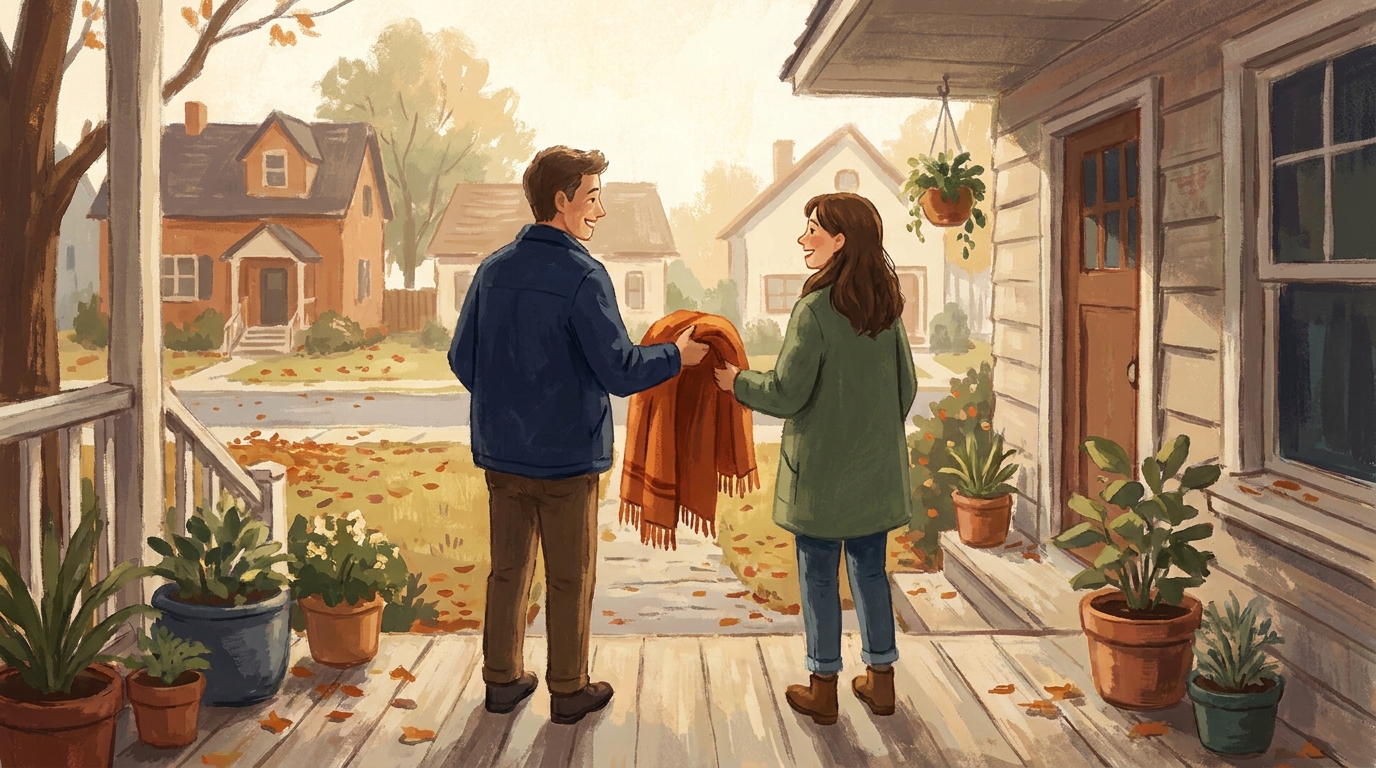
At StuffRescue, our work is built on a simple idea: nothing useful should go to waste while a neighbor goes without. Central to this is the practice of dignity in giving. When you offer a dresser or a winter coat, the neighbor who needs it should never have to explain why.
The meaning of dignity in giving
When we say "dignity, never charity," we mean that asking for something you need should not come with a burden of proof. Traditional systems often require paperwork, intake processes, or proof of hardship before someone can take a coat or a dining chair home. We believe a neighbor should not have to share their personal struggles just to furnish a room or clothe their family.
Practicing dignity in giving means removing those barriers entirely. On StuffRescue, there are no applications to fill out. No one has to prove they are going through a difficult time. If a neighbor sees an item they can use, they simply tap to rescue it. The process is exactly the same for everyone, whether they are picking up a spare lamp for a guest room or replacing a broken bed frame they cannot afford to buy new. By keeping the process identical for every member, we ensure that no one is singled out.
Nothing useful should go to waste
The other half of the StuffRescue mission is keeping perfectly good items out of the trash. Every year, a staggering amount of usable furniture, clothing, and household goods is thrown away simply because it is easier to discard them than to find them a new home.
In 2018, Americans generated 292.4 million tons of municipal solid waste, which breaks down to about 4.9 pounds per person every single day (National Overview: Facts and Figures on Materials, Wastes and Recycling | US EPA). Of that total, exactly 50 percent—more than 146 million tons—was sent straight to landfills.
Every item rescued by a neighbor is one less item taking up space in a landfill. By choosing to give things away locally, you turn the simple act of decluttering into a measurable environmental benefit. A dining table that might have been left on the curb gets a second life, and the person who takes it gets exactly what they need.
How giving with dignity works in practice
To make sure giving with dignity is the standard, our platform is built on a few strict rules. Nothing is for sale. There is no selling, no haggling, and no cash exchanged between neighbors. The giver never pays a fee to post an item. Posting is as simple as tapping the orange "Rehome an Item" button and adding one to three photos. Our autofill reads the photos and suggests a title, category, description, and condition, which you can easily edit.
When you browse free things near you, you will see the description, the condition, and the cost line. Rescuing anything within a 3-mile straight line of your saved home location is completely free. If an item is further away, a rescue costs one flat $0.99, paid by the rescuer from a prepaid wallet that is loaded in $5, $10, $15, or $20 amounts. The cost shows on the item before tapping Rescue, and a canceled rescue puts the 99 cents back. The first person to claim the item gets it.
After you tap to rescue, a private chat opens between you and the giver to arrange a pickup time. There is no delivery; the rescuer always picks up. To protect everyone's privacy and ensure a smooth handoff, each rescue uses a six-digit pickup code. The rescuer shows or reads the code at the door, and the giver checks that it matches. Nobody has to type it into the app, and there is no handoff without a match. You can read more about how the free radius and pickup codes work.
Keeping the StuffRescue mission safe
Part of respecting your neighbors is making sure the items you give away are safe to use. We do not inspect items, so the giver's description is exactly what the rescuer expects. Givers should always check furniture for bed bugs and never list anything that shows signs of them.
There are also federal rules to follow. Under Section 19 of the Consumer Product Safety Act, it is a violation of federal law to sell, offer for sale, or donate any recalled consumer product (cpsc.gov). While individuals are not required to test products for safety, anyone giving away used goods for free is legally prohibited from donating items that fail to meet federal safety requirements or have been recalled. Before you post an item, you must check it against official recall databases.
A structure that follows our impact
We often say that our structure will follow our impact. StuffRescue started in Akron, Ohio, and is now open in every state. We operate as a registered nonprofit because our goal is to build a free way for neighbors to help each other, not to make a profit off those exchanges.
This structure also allows us to support local organizations. Verified nonprofits, churches, schools, and agencies use our Partner Portal to post campaigns with lists of specific needs. Neighbors see these requests on the Wish Program and the map, and can offer items directly. Whether you are fulfilling a specific request for a local agency or giving away a couch you no longer need, you are part of a system that values people over paperwork.
Sources
Published by StuffRescue, a US nonprofit based in Akron, Ohio. Spotted something out of date? Email info@stuffrescue.co.
More from the blog
How Businesses Can Give Goods, Not Just Dollars
Learn how corporate in-kind donations, employee giving ideas, and volunteer time can support local organizations and reduce waste.
Why Akron's Buy Nothing Groups and StuffRescue Aren't Competing (And How to Use Both)
Buy Nothing Akron groups and StuffRescue both help neighbors give and rescue free stuff — here's how the two work together, not against each other.
When a Child Arrives With Nothing: Helping Foster Families
Foster placements in Akron and Summit County often happen fast. See what families need in the first 48 hours and how to help foster families nearby.