
Donating & rehomingLast reviewed 7 min read
What to Do With Halloween Costumes and Decorations After October 31
Wondering what to do with old Halloween costumes and decorations? Learn how to donate, reuse, and recycle your spooky items to keep them out of the
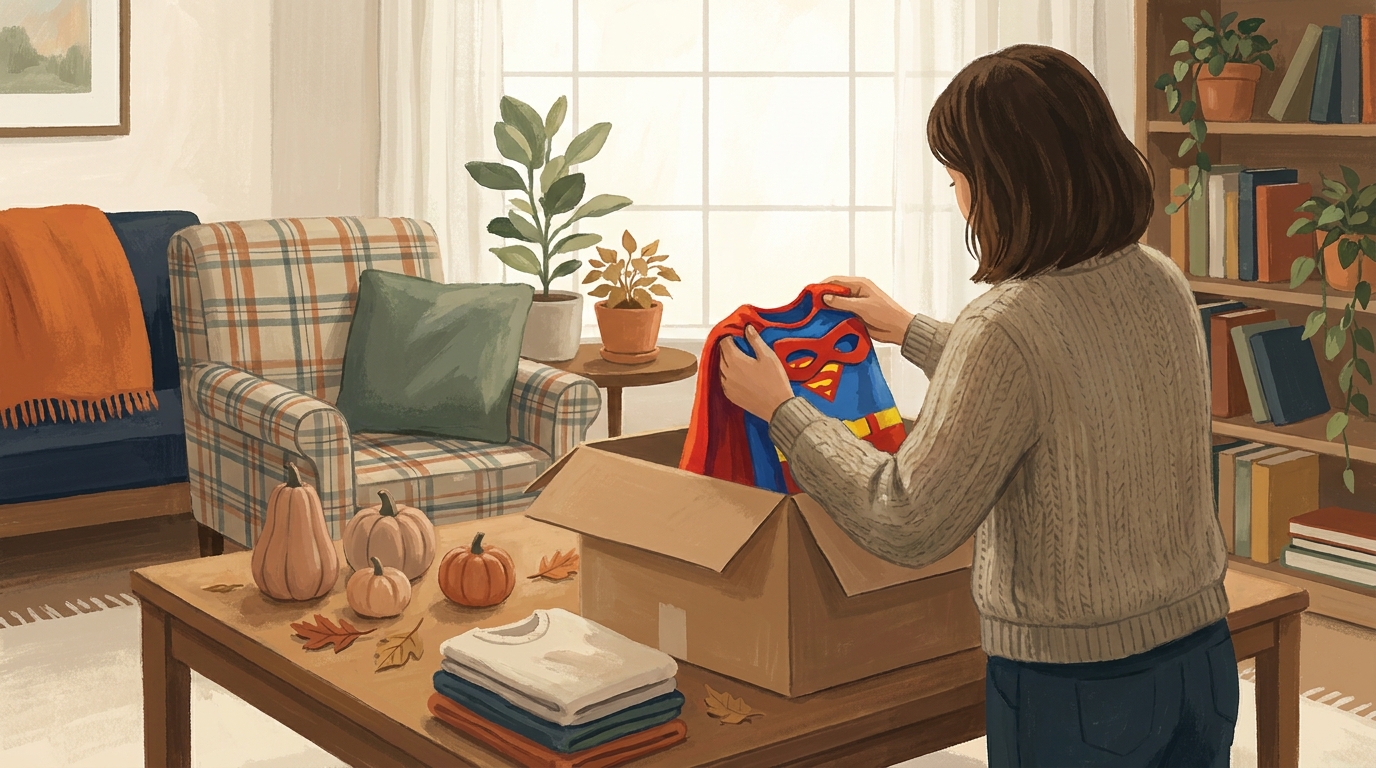
Wondering what to do with old Halloween costumes and yard displays once November arrives? You can donate Halloween costumes to local charities, pass them to neighbors, or recycle unwearable items. By properly storing, sharing, or recycling your spooky gear, you keep synthetic fabrics and plastics out of the landfill.
In short
- Give gently used costumes to thrift stores, local theater groups, or specialized charities.
- Pass yard inflatables and decorations to neighbors or local haunts.
- Store fabrics in dry, sealed containers to prevent mold and mildew.
- Recycle unwearable costumes through textile recycling programs; never put them in curbside bins.
Where is the best place to donate Halloween costumes?
Kids outgrow their clothes quickly, and a toddler who loved being a pumpkin this year will likely want to be a superhero next year. This leaves many households with closets full of single-use outfits. Fortunately, when you are ready to donate Halloween costumes, you have several excellent options that keep these items circulating in the community.
National thrift chains are often the easiest drop-off points. Organizations like Planet Aid, Goodwill, and The Salvation Army accept gently used costumes to resell. Dropping your items at these locations diverts them from landfills and provides affordable options for other families next season.
If you want your items to go directly to children who might not otherwise get to dress up, look for specialty nonprofits. For example, Ween Dream is a notable organization that collects new and gently used costumes and donates them to children in need, including those with special needs or from low-income families. Mailing your high-quality, complete outfits to specialized charities ensures they find a grateful new home.
How can you pass items to neighbors or local groups?
Sometimes the best home for your spooky gear is right in your own neighborhood. If you want to give items directly to people in your community, StuffRescue is a free way for neighbors to give things away and rescue what others no longer need. You simply snap a few photos of the costume or yard inflatable, and the app helps suggest a title and description. When someone claims it, a private chat opens so you can agree on a pickup time. The giver never pays, and you do not have to worry about haggling or cash. To understand the pickup process, you can read about how the free radius and pickup codes work.
Beyond individual neighbors, community groups are always looking for ways to reuse Halloween costumes. Local daycares and preschools frequently accept outgrown kids' costumes to stock their year-round dress-up bins. High school theater departments and community dance groups also welcome adult costumes, vintage clothing, and unique accessories for their stage productions.
Organizations like daycares, verified nonprofits, and schools use the StuffRescue Partner Portal to post campaigns for specific needs. You might see a local drama club asking for vintage clothing or an after-school program looking for dress-up gear. Neighbors see these requests on the Wish Program and can offer their old costumes directly to the organization.
Where can you take Halloween decorations to donate them?
Elaborate yard displays, foam tombstones, and string lights take up significant storage space. If you are downsizing your holiday setup, you might wonder where to take Halloween decorations to donate them. Standard thrift stores will usually accept string lights, small indoor decorations, and complete, working inflatables.
However, standard charities will not take broken electronic decorations. If you have a motorized zombie that no longer moves or a fog machine that has stopped working, reach out to local haunted house attractions. Organizations like The Region's Carnevil Haunt and other specialty shops often accept broken animatronics. They harvest these broken props for parts, motors, and wiring to repair their own elaborate displays.
If you have an impressive collection of decorations but no longer want to store them, consider how they might be used for fundraising. Programs like Skeletons for St. Jude allow homeowners to use their massive yard displays to raise funds for St. Jude Children's Research Hospital. Passing your high-quality decorations to a neighbor who participates in a similar charity drive is a wonderful way to give your items a second life.
How should you store costumes to keep them fresh for next year?
If you decide to keep your costumes for younger siblings or future parties, proper storage is essential. Costumes and fabric decorations must be stored in dry, sealed environments. Basements and attics can fluctuate in humidity, leading to mold. Mildewed clothing cannot be resold or donated; in fact, contaminated or mildewed items are sent directly to the landfill by sorting facilities.
Use airtight plastic bins rather than cardboard boxes, which can attract pests and absorb moisture. Toss a few silica gel packets into the bin to absorb any lingering humidity.
What is the best way to prepare items for giving away?
Whether you are passing items to a neighbor or dropping them at a charity bin, a little preparation ensures the next person can actually use what you give them. Nobody wants to open a bag to find a superhero outfit missing its cape.
Wash and dry the fabric
Clean costumes according to the care tag to prevent mildew from forming while in transit or storage.
Check for missing pieces
Keep masks, belts, and accessories together in a clear bag so the next person gets the full outfit.
Test the electronics
Make sure battery-operated decorations still light up or make sound before passing them on.
Box up safely
Pack fragile decorations in sturdy containers to prevent crushing during the handoff.
What should you do with unwearable costumes and broken props?
Not everything can be saved. Heavily stained masks, torn costumes, and moldy fabrics should not be donated to standard thrift stores. Passing on trash only burdens the charity with disposal fees.
The Environmental Protection Agency (EPA) reports that the U.S. sends 11.3 million tons of textiles to landfills annually, with a recycling rate for clothing and footwear of only about 13%. This problem is heavily exacerbated by the cheap, synthetic materials used in single-use Halloween costumes. Materials like polyester and nylon are essentially plastics and do not break down in the environment.
Instead of throwing unwearable costumes in the garbage, look for dedicated textile recycling centers. These facilities can process unwearable fabrics, shredding them into wiping rags or using them for furniture stuffing and building insulation.
When dealing with plastic props, faux cobwebs, and mixed-plastic candy wrappers, avoid wishcycling—the practice of tossing questionable items into curbside recycling bins hoping they will be recycled. The EPA advises against this, as mixed plastics and tangled faux cobwebs contaminate the recycling stream and can jam sorting machinery. Always check with your local municipal recycling provider first to see exactly what plastics they accept.
Comparing your options for old Halloween gear
If you are sorting through a mixed pile of October gear, here is a quick guide on where to route different items.
| Option | Best for | What to know |
|---|---|---|
| Local charities | Gently used, complete costumes | Call ahead to see if they accept seasonal items year-round. |
| StuffRescue | Costumes, props, and inflatables | Neighbors pick up right from your door. |
| Textile recycling | Torn, stained, or unwearable fabrics | Keeps synthetic materials out of the landfill. |
| Haunted houses | Broken animatronics and creepy props | They often harvest motors and parts to repair other displays. |
Taking an afternoon to sort, clean, and properly route your old Halloween items makes a massive difference. By choosing to donate Halloween costumes, pass on decorations, and recycle the rest, you help your community celebrate affordably while keeping unnecessary waste out of the local landfill.
Can I recycle plastic candy wrappers?
Most curbside recycling programs do not accept mixed-plastic candy wrappers because they are too small and made of blended materials. Check with your local provider or look for specialty mail-in recycling boxes designed for wrappers.
Do thrift stores take Halloween items in November?
Many large thrift stores accept seasonal items year-round and store them in the back until the next season. However, storage space varies, so it is always best to call your local shop to confirm their policy before making a trip.
How do I safely dispose of a broken fog machine?
Fog machines contain electronic components, heating elements, and wiring, meaning they should not go in the regular trash. Take them to an e-waste recycling facility, or check if a local haunted house attraction can use them for spare parts.
Sources
- Planet Aid Thrift Store: Tips for an Eco-Friendly Halloween
- Where to donate Halloween costumes in 2026! - Celebrating with kids
- Donate - The Region's Carnevil Haunt 2026
- Decoration Skelebration for St. Jude - St. Jude Inspire
- What Really Happens to Unwanted Clothes? | Green America
- CPSC Offers Safety Tips to Keep Hazards from Haunting Your Halloween | CPSC.gov
- Textiles: Material-Specific Data | US EPA
Published by StuffRescue, a US nonprofit based in Akron, Ohio. Spotted something out of date? Email info@stuffrescue.co.
More guides on donating & rehoming
Donating & rehoming
Where to Donate Winter Coats (and What Coat Drives Need Most)
Learn where to donate winter coats, how to find a local coat drive near you, and what sizes and winter accessories organizations need most right now.
Donating & rehoming
Where to Donate Furniture in Akron, Ohio (Every Free Option, Compared)
Compare every free way to donate furniture in Akron, Ohio—Buy Nothing groups, curb alerts, Habitat ReStore, Goodwill, and StuffRescue—side by side.
Recycling & disposal
What StuffRescue Can't Take: A Guide to Household Hazardous Waste Disposal in Akron
StuffRescue won't take paint, propane, or chemicals. Here's where household hazardous waste disposal in Akron actually goes, and what fits a neighbor.